World Cup 2026 xG Power Rankings After Matchday 1
World Cup 2026 xG power rankings after Matchday 1 give us an early view of which teams are performing well […]
Cape Verde did not need a goal to make history (Spain 0-0 Cape Verde). In their first ever FIFA World Cup match, the Blue Sharks held Spain to...
 By GoalStatsLab
•
Jun 15, 2026
•
7 min read
By GoalStatsLab
•
Jun 15, 2026
•
7 min read
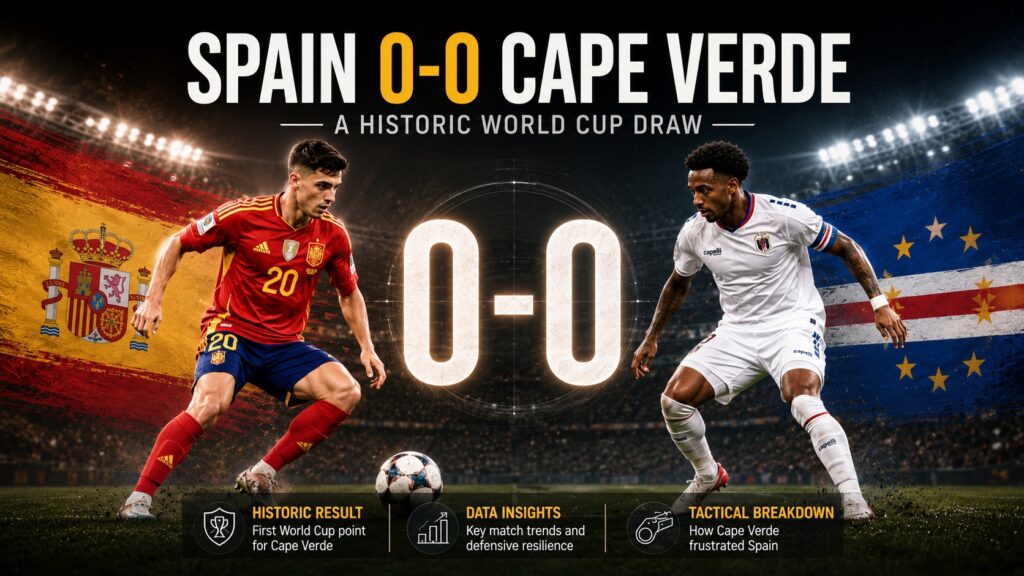
Cape Verde did not need a goal to make history (Spain 0-0 Cape Verde).
In their first ever FIFA World Cup match, the Blue Sharks held Spain to a 0-0 draw — a result that immediately became one of the most symbolic moments of the tournament. On one side stood Spain, European champions, World Cup winners in 2010 and one of the most technically gifted national teams of the modern era. On the other stood Cape Verde, a small island nation making its debut on the biggest stage in football.
The result was more than a draw. It was a statement.
Before kick-off, this looked like one of the clearest mismatches of the group stage. Spain entered the tournament as one of the favourites, with a squad full of elite players, a strong tactical identity and recent success at international level.
Cape Verde arrived with a different kind of power: belief, discipline and a national story that had already captured attention.
For Cape Verde, simply reaching the World Cup was historic. Holding Spain goalless in the opening match turned that history into something even bigger.
This was not a lucky point. It was a disciplined performance built on compact defending, emotional control and a goalkeeper who refused to let the moment become too big.
Cape Verde’s football story is not an overnight miracle.
For many years, the country was seen as one of Africa’s smaller football nations. With a small population, limited domestic infrastructure and a national team heavily connected to its diaspora, Cape Verde had to build differently.
That diaspora became one of its greatest strengths. Players with roots in Cape Verde, many developed in Portugal, France, the Netherlands and other European football environments, helped raise the technical and tactical level of the national team.
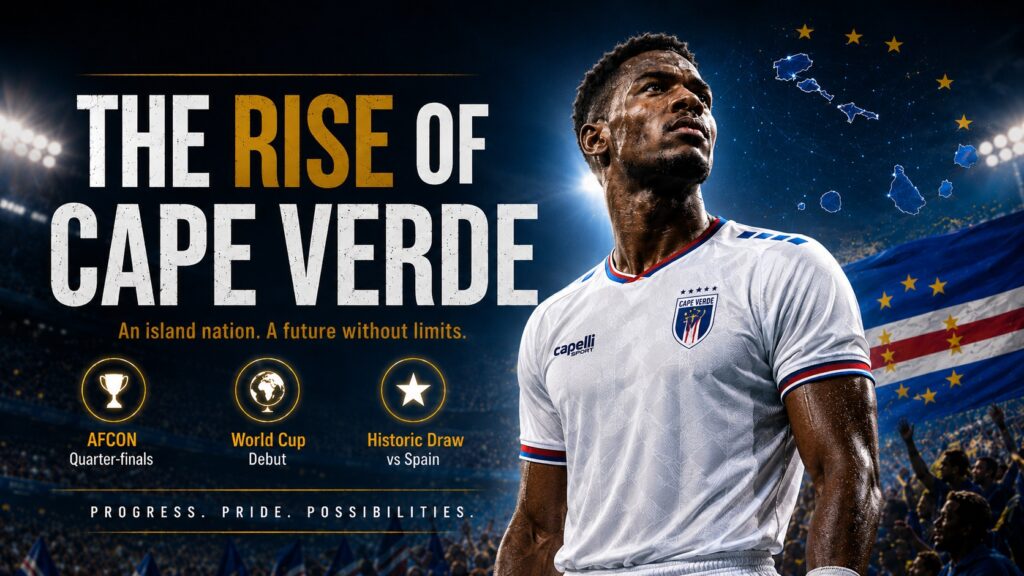
The signs of progress had already appeared before this World Cup. Cape Verde reached the quarter-finals of the Africa Cup of Nations in 2013 and again in 2023. Those performances showed that the Blue Sharks were not just a romantic underdog story. They were becoming a serious competitive team.
Their qualification for the 2026 World Cup confirmed that rise. Their draw against Spain gave the world proof.
To understand the weight of this result, we must understand who Cape Verde stopped.
Spain are not just another football nation. They are one of the defining teams of the 21st century. Their golden era between 2008 and 2012 changed international football: Euro 2008, World Cup 2010 and Euro 2012 formed one of the greatest cycles ever seen in the sport.
That generation was built on control, positional play, midfield dominance and technical superiority. Spain became the reference point for how a national team could dominate the ball and suffocate opponents.
After a more difficult period in World Cups, Spain rebuilt. The 2024 European Championship title brought them back to the top of international football. With young talent, experienced midfielders and a renewed attacking identity, Spain arrived at the 2026 World Cup with high expectations.
That is why this 0-0 matters.
Cape Verde did not hold an average team. They held one of the strongest football nations in the world.
Before the match, the numbers strongly favoured Spain.
Prediction models expected Spain to win comfortably. The gap in experience, squad value, international ranking and tournament history was enormous. Spain had more technical quality, more ball control and more elite-level experience.
But football data does not only explain favourites. It also explains resistance.
This match showed a classic difference between control and efficiency.
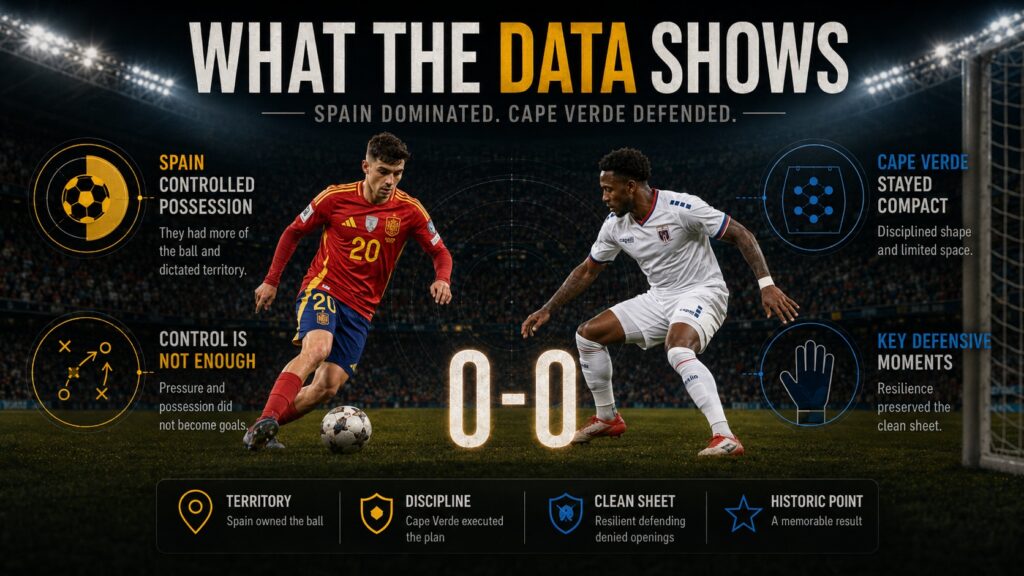
Spain controlled large parts of the game, but control did not become goals. Cape Verde defended the central spaces well, protected their penalty area and forced Spain into lower-quality situations. The longer the game stayed goalless, the more the pressure shifted from the underdog to the favourite.
Cape Verde’s defensive structure was the real story. Their back line stayed compact, the midfield protected dangerous zones, and goalkeeper Vozinha delivered key saves when Spain finally found space.
For Spain, the data tells a warning story: possession is not enough. Territory is not enough. Reputation is not enough. Against a disciplined low block, the final action matters most.
For more tournament context, check our World Cup 2026 predictions and Group H standings.
Cape Verde’s draw was not built on chaos. It was built on order.
They accepted that Spain would have more of the ball. They accepted long periods without possession. But they did not lose shape. They did not panic. They defended the box with patience and waited for moments to break forward.
This is one of the most important lessons from the match: smaller teams do not always need to match stronger teams in possession. They need to reduce space, stay mentally strong and maximize the few moments they create.
Cape Verde did exactly that.
Even late in the match, when Spain pushed for a winner, Cape Verde still found moments to counterattack and threaten. That made the draw feel even more impressive. They were not simply surviving. They were competing.
For African football, this result carries symbolic weight.
Cape Verde are not one of the continent’s traditional giants. They are not Cameroon, Nigeria, Senegal, Morocco, Ghana or Ivory Coast. Yet they reached the World Cup and then opened their campaign by stopping the reigning European champions.
That matters.
It shows how football development is changing. Smaller nations with strong identity, diaspora networks, better organization and tactical discipline can compete at the highest level.
Cape Verde’s point against Spain will inspire other small football nations, especially in Africa and the Portuguese-speaking world. It proves that the gap between reputation and reality can close quickly when preparation meets belief.
The draw changes the early balance of Group H.
Spain were expected to start with three points. Instead, they now face pressure in their remaining matches. For a favourite, dropping points in the opening game creates immediate tension. Every next fixture becomes more important.
For Cape Verde, the result creates belief. A point against Spain means they are alive in the group. It also means Saudi Arabia and Uruguay will not look at them as an easy opponent.
The Blue Sharks have already changed the conversation around the group.
Before the tournament, many asked how many goals Spain would score. After 90 minutes, the question became: how far can Cape Verde go?
For more details on the Spain 0-0 Cape Verde match, visit the official FIFA Match Centre.
Spain 0-0 Cape Verde will be remembered not because of goals, but because of meaning.
It was the night a World Cup debutant refused to be overwhelmed. It was the night a small island nation stood face to face with one of football’s great powers and did not blink.
For Spain, it was a warning. For Cape Verde, it was history.
And for football, it was a reminder of why the World Cup remains special: sometimes the biggest stories are written by the teams nobody expected to stop the giants.
The result was historic because Cape Verde held one of Europe’s strongest national teams to a goalless draw on the World Cup stage. From a data perspective, the match shows why football analysis should look beyond team reputation and consider match context, defensive structure and chance quality.
A 0-0 draw can still reveal important patterns. Shots, xG, possession, corners, cards and defensive actions can show whether the match was balanced, whether one team dominated without finishing, or whether both teams limited clear chances.
Not always. A match can finish 0-0 because of strong defending, poor finishing, low chance quality, good goalkeeping or tactical control. GoalStatsLab recommends combining match stats, xG, shots and context before drawing conclusions.
Yes, but it should not be used alone. One result can change perception, but future predictions should also consider recent form, opponent strength, home and away context, squad news, group situation and available match data.
You can review match-level insights on the Matches page and compare prediction markets on the Predictions page.
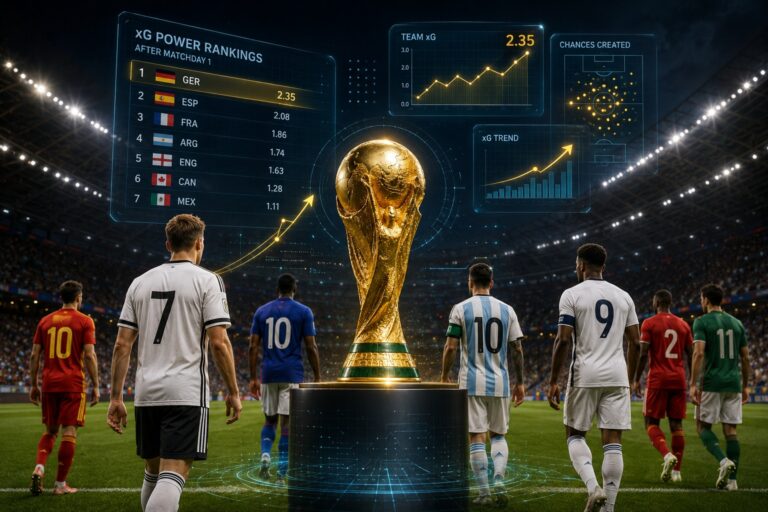
World Cup 2026 xG power rankings after Matchday 1 give us an early view of which teams are performing well […]
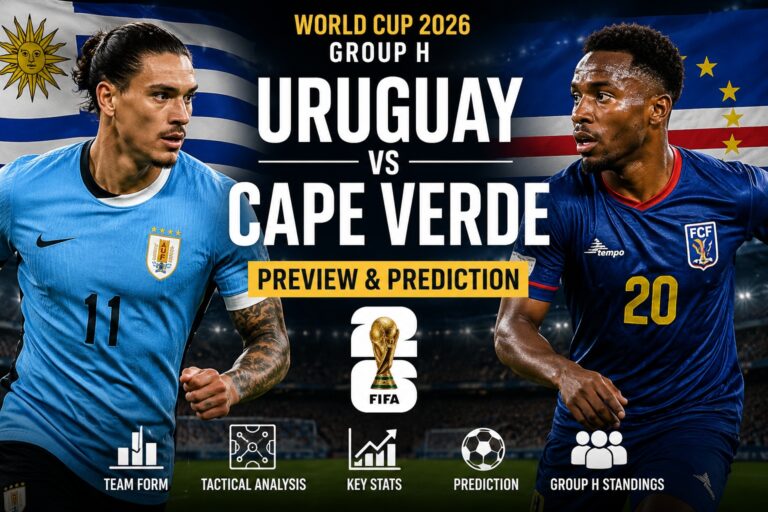
Uruguay vs Cape Verde prediction is one of the most interesting topics in Group H of the 2026 FIFA World […]
World Cup 2026 stats are already showing some interesting early patterns in the group stage. The tournament has started with […]